Dallas/Fort Worth International Airport handles more than 85 million passengers a year — and if you are moving a group of 15, 30, or 56 people through one of the world's busiest airports, the question keeping every organizer up the night before is a simple one: where exactly will the bus be, and how does the whole group get to it without someone going to the wrong terminal? Most rental pages leave that fuzzy. This guide answers it plainly, using DFW's own published procedures, and then walks you through the rest of what a group trip needs: which terminal handles your airline, how TEXRail and the DART Silver Line actually work for a party your size, what the ride times look like from different parts of Fort Worth and the Metroplex, and why the math on a single bus versus a fleet of rideshares changes the moment your headcount gets past eight or ten people.
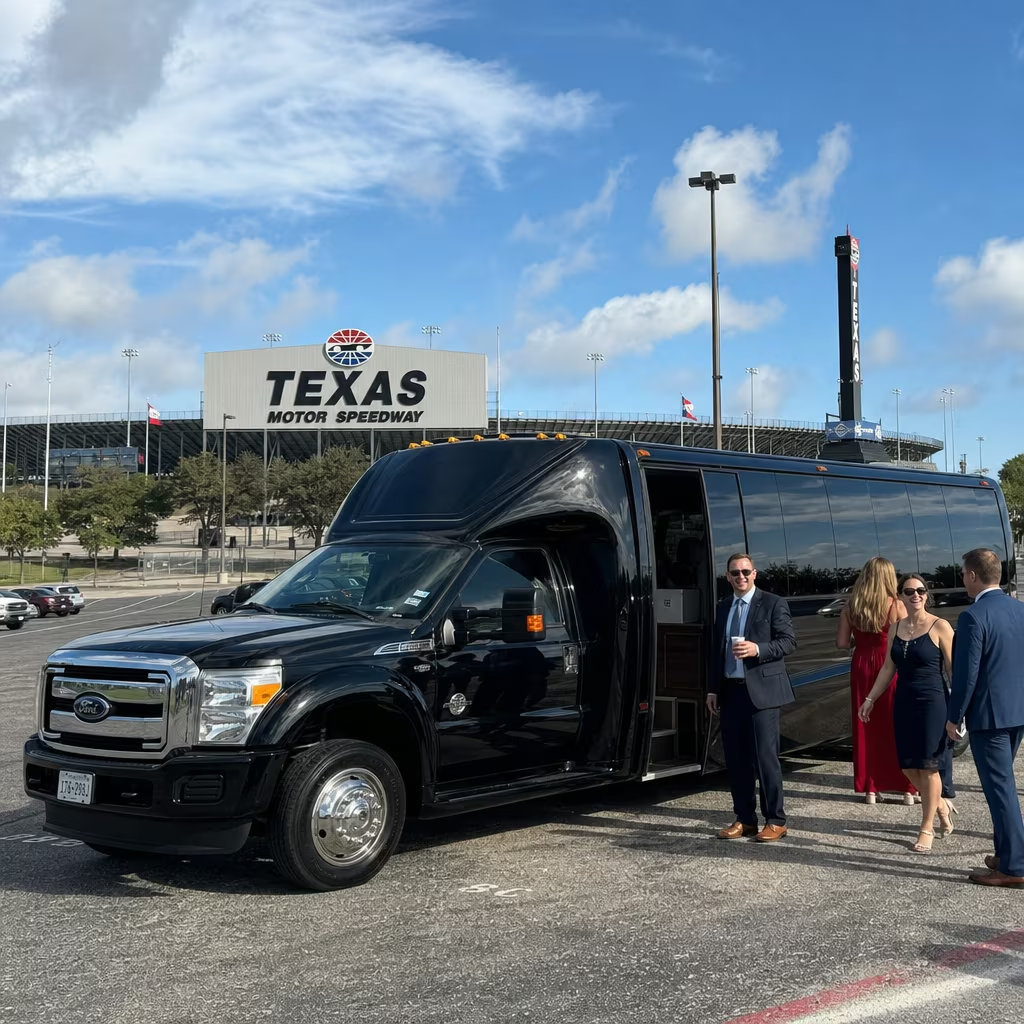
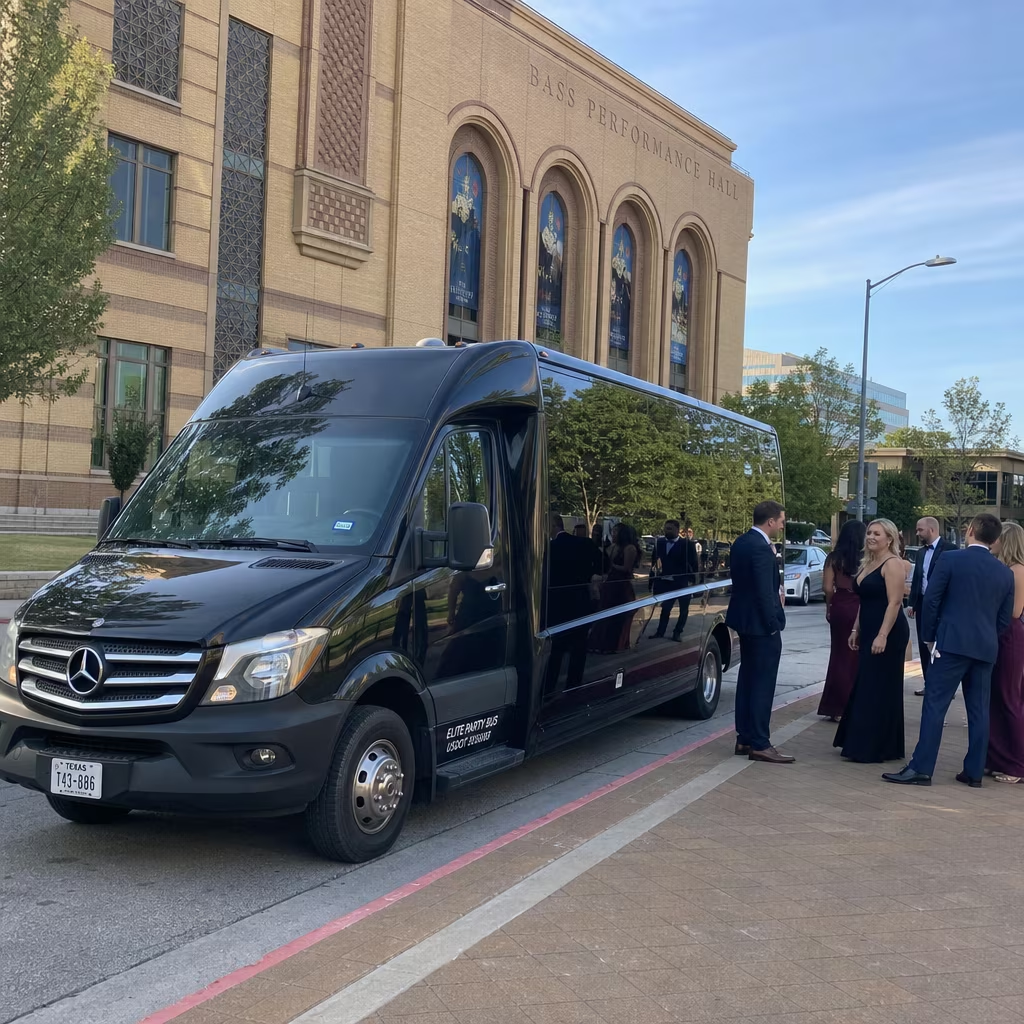
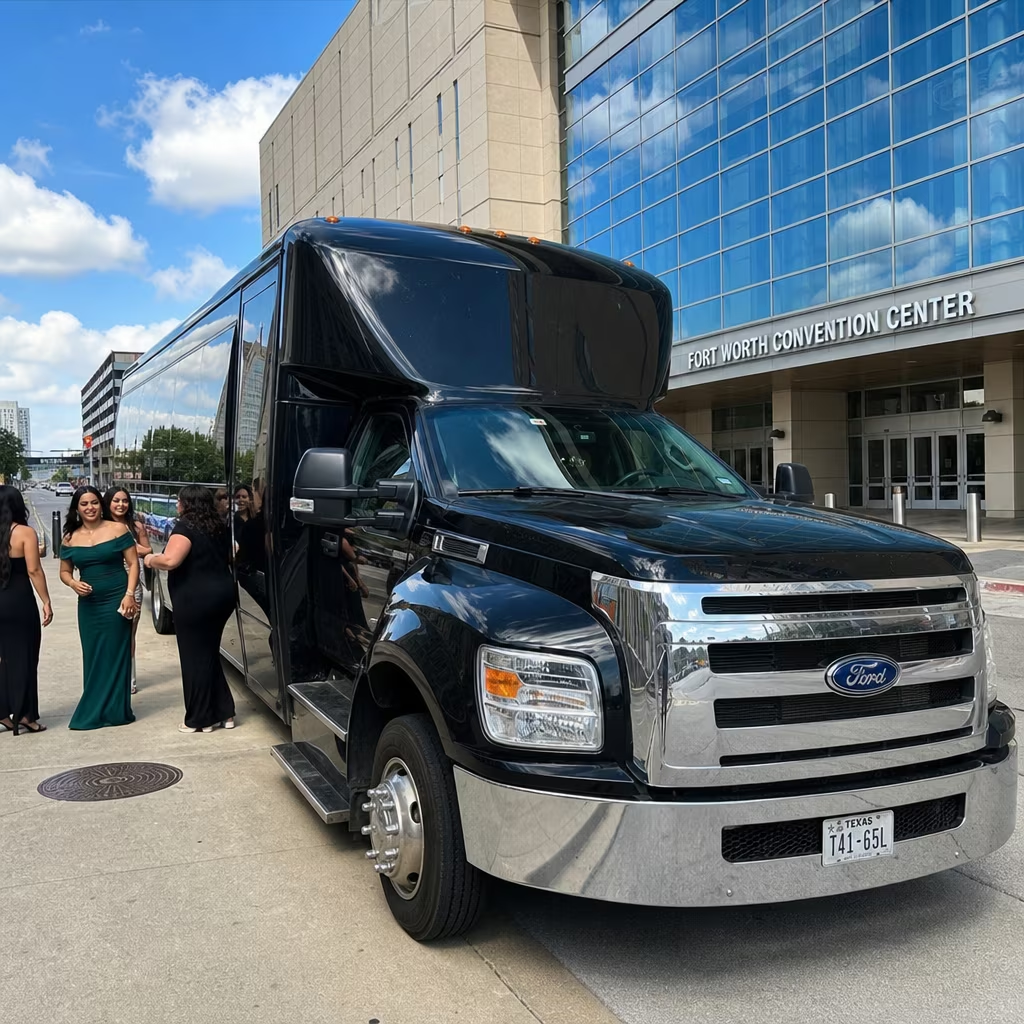
Party Bus in Fort Worth runs DFW pickups and drop-offs across the Metroplex year-round — for corporate teams heading in for a convention, wedding parties landing at Terminal D from three different cities, sports groups flying out to road games, and everything in between. The guidance below is what we tell every group before they book — not pulled from a brochure, but built from doing it on International Parkway and SH-121 repeatedly.
Airport code
DFW — Dallas/Fort Worth International Airport
Where your bus meets you
Lower level, baggage claim curbside — each terminal has its own zone
Annual passengers
85.7 million in 2025 — arrivals halls fill fast
Terminals
A, B, C, D, and E — Terminal F opening Phase 1 in 2027
From downtown Fort Worth
~17–21 miles via SH-121 and TX-183 — roughly 25–40 minutes off-peak
Inter-terminal connection
Skylink train, airside, departing every 2 minutes
What DFW Is, and Why It Matters for Group Travel
DFW is the primary hub for American Airlines and one of the busiest airports on the planet — ranked sixth in the world by passenger traffic in 2025. That volume means arrivals halls fill fast, ground-floor curbsides back up in the late afternoon, and the roadways inside the airport's massive horseshoe loop — International Parkway plus several spur roads connecting each terminal — can crawl at peak periods. For a solo traveler grabbing a rideshare, that's an annoyance.
For a group of 30 people with checked bags and three different flight numbers landing across two terminals, it can become a genuine logistics problem if there's no coordinated plan in place before anyone boards.
The airport sits squarely between Fort Worth and Dallas, which is exactly why it works so well as a hub and why the approach from each city takes a different highway. From Fort Worth, most groups run up SH-121 (Airport Freeway) east to TX-183, which feeds directly into International Parkway. From Dallas, the approach is typically via TX-114 out of Las Colinas or I-635/LBJ north.
Both routes converge on International Parkway — the central spine that connects all five terminals — but they enter from opposite sides of the airport, so confirming which terminal and which end of the loop matters for timing.
Which Terminal Is Your Airline?
DFW's five terminals are arranged in a horseshoe. The short version, confirmed against the airport's current airline assignments:
- Terminal A — American Airlines (domestic and regional)
- Terminal B — American Airlines; also the hub for TEXRail from Fort Worth and the DART Silver Line from the north and east Metroplex
- Terminal C — American Airlines
- Terminal D — International terminal; American Airlines international plus Air France, British Airways, Emirates, Japan Airlines, Korean Air, Lufthansa, Qantas, Qatar Airways, Aeromexico, and others
- Terminal E — All other carriers: Delta, United, Frontier, JetBlue, Alaska, Spirit, and additional domestic airlines
Terminal F is under active construction as part of DFW's $4-plus billion expansion. Phase 1 is targeting a 2027 opening with 15 of 31 gates; the full terminal opens by 2031 and will be dedicated to American Airlines operations. For a group with members arriving on different airlines, Terminal E versus Terminal A/B/C/D can mean opposite ends of the horseshoe — that's where the Skylink train and the TerminalLink ground shuttle matter for regrouping, and where having one coordinated bus pickup point (rather than a dozen separate rideshares at four different terminals) saves the most time.
Where Your Bus Picks Up and Drops Off at DFW
Here is the part most guides get fuzzy on. At DFW, commercial vehicles including charter buses and minibuses operate on the lower level of each terminal — the baggage claim and arrivals floor. The upper level is dedicated to departures; the lower level is where you load luggage, find ground transportation, and meet your pre-arranged pickup.
Each terminal's lower level has a curbside commercial vehicle zone. Pickup reference points published in shuttle operator guides:
- Terminal A: Lower baggage claim level, near Doors A10 and A20
- Terminal B: Lower baggage claim level, near Doors B30 and B40
- Terminal C: Lower level, near Doors C15 and C20
- Terminal D (International): Lower level directly outside baggage claim, near Doors D15 and D25 — important note: international arrivals through customs can take 60–90 minutes during peak waves, so factor that into pickup timing
- Terminal E: Lower level near Doors E10 and E15
For departures, your bus drops everyone at the upper level curbside of the specific airline's terminal so the group walks straight to check-in. The bus should not linger — DFW enforces dwell-time limits at the active curbside. For larger vehicles, look for the wide lanes marked with yellow signage that accommodate oversized vehicles and allow quicker unloading without blocking the regular car lanes.
The one-line version for arrivals: your group meets the bus on the lower level (baggage claim floor) of your specific terminal — not on the upper departures curb, and not in a shared lot a walk away. Have the group coordinator call when everyone has bags in hand and is heading toward the curbside exit. A bus waiting at DFW's North or South Cell Phone Lot can reach any terminal's lower level in under five minutes.
The Cell Phone Lots: Where the Bus Waits
DFW operates two free cell phone waiting lots — one at the north end of the airport and one at the south end (the south lot address is 2400 Aviation Drive, near the intersection of Rental Car Drive and Southgate Avenue). Both allow free waiting up to two hours, and a vehicle must be attended at all times. For a group pickup, the standard workflow is: your group coordinator calls or texts once the full group has luggage and is walking toward the lower-level exit, the bus moves from the cell phone lot to the lower-level curbside of your terminal, and everyone loads.
With two lots on opposite ends of the horseshoe, the bus is never more than a few minutes from any terminal at all. We always recommend confirming the current lot availability on DFW's cell phone lots page before your trip date, since lot rules can change.
Confirm the Meet Point When You Book
DFW is in the middle of a major expansion — a $12 billion project adding Terminal F and expanding existing terminals — and construction activity periodically shifts ground-level roadways and curbside lanes. Any guide that quotes a fixed "pull up to Door X" instruction without noting a confirmation step is a coin flip on accuracy. When you book with Party Bus in Fort Worth, we confirm the current approach for your terminal and your date, because that's one less thing the group organizer needs to track.
We recommend also checking DFW's official ground transportation page before your trip for any active curbside changes.
Which Vehicle Fits Your Group?
The right vehicle for a DFW run is the one that seats everyone and handles the luggage, because airport groups almost always travel with checked bags. Here is how the fleet breaks down for arrivals and departures.
| Vehicle | Typical capacity | Luggage handling | Best for |
|---|---|---|---|
| Sprinter van / 14-passenger Sprinter limo | Up to ~14 | Modest — carry-ons and a few checked bags | Small corporate teams, VIP pickups, executive transfers |
| 15–35 passenger minibus | ~15–35 | Good — overhead bins plus underfloor | Mid-size groups, wedding parties, school teams |
| Party bus (15–50 passengers) | ~15–50 | Lighter — built for fun, not heavy bag loads | Celebration groups where the ride is part of the event |
| 40–56 passenger charter bus | Up to 56 | Excellent — large undercarriage bays | Large conventions, sports teams, church groups, reunions |
A full-size charter bus is the workhorse for big arrivals where the whole group lands in one wave with checked luggage. Deep undercarriage bays handle suitcases for 40 or 50 people without anyone squeezing bags into the cabin. For smaller teams, a 25-passenger minibus gives you the same single-pickup simplicity at a right-sized cost.
And if your group is heading straight from DFW to a celebration — a bachelorette weekend launching from the airport, or a family reunion arriving together before the party — a party bus with built-in mood lighting and a sound system makes the airport transfer part of the fun rather than an obstacle to it.
Need ADA-accessible seating, extra undercarriage bay space for sports equipment, or a vehicle spec'd for a specific hotel load-in? Call 214-540-6738 and we will match the vehicle to what your group actually needs.
Routes and Drive Times From DFW to the Metroplex
DFW sits near the geographic center of the Metroplex, which is one reason it became such a major hub. The flip side is that it's on the fringe of both Fort Worth and Dallas proper — close enough that the drive looks short on a map, long enough that SH-121 and TX-183 can back up significantly during morning and evening peak hours.
| From DFW to… | Approx. distance | Typical drive time (off-peak) |
|---|---|---|
| Downtown Fort Worth | ~17–21 miles | 25–40 minutes |
| Fort Worth Stockyards | ~20 miles | 28–42 minutes |
| TCU / Westside Fort Worth | ~23 miles | 30–45 minutes |
| North Richland Hills / Hurst | ~12–16 miles | 18–28 minutes |
| Arlington / Mansfield | ~25–32 miles | 30–50 minutes |
| Grapevine / Southlake | ~8–14 miles | 12–22 minutes |
| Downtown Dallas / Uptown | ~20–25 miles | 25–40 minutes |
| Irving / Las Colinas | ~12–18 miles | 18–28 minutes |
| Plano / Frisco | ~30–38 miles | 35–55 minutes |
A few route notes that matter in practice:
- SH-121 westbound from DFW toward Fort Worth carries heavy commuter and airport traffic every weekday afternoon. A 4:00 PM pickup landing at 4:30 PM is a very different trip than a 10:00 PM pickup — build in buffer for any afternoon flight.
- TX-183 (Airport Freeway) handles most of the Fort Worth-side flow and can slow significantly between the airport and I-820. For morning departures, this stretch is the one most likely to add time.
- Groups connecting to Grapevine or Southlake are the lucky ones — those are the closest suburbs to DFW, and the ride clears in under 25 minutes nearly any time of day.
- Arlington groups heading to events at AT&T Stadium or Globe Life Field should plan for the I-360/SH-360 interchange south of the airport, which gets congested on event days.
TEXRail, DART, and Public Transit: The Honest Comparison for Groups
DFW now has three rail connections, and for the right traveler, they're genuinely useful. Here's the real picture for a group.
TEXRail (operated by Trinity Metro) connects downtown Fort Worth's T&P Station to Terminal B at DFW in approximately 55 minutes, with 30-minute headways during peak service. A round trip runs under $4 per person. For a solo business traveler commuting to Fort Worth, it's a genuine option.
For a group of 20 landing at Terminal B with luggage for a weekend in the Stockyards, the math changes: 20 people times $4 each is $80 for transit, and then you still need ground transport at the Fort Worth end because T&P Station is not where most groups are going. A single minibus beats the economics and the logistics the moment your group hits more than a few people.
DART Silver Line launched in October 2025 and serves Terminal B from a 26-mile route through Grapevine, Coppell, Carrollton, Addison, Richardson, and Plano. Trains run every 60 minutes (30 minutes during peak hours), and a full ride from the Shiloh Road station in Plano takes just under an hour. Like TEXRail, it lands at Terminal B — which is fine if that's your airline's terminal, and a Skylink transfer if it isn't.
Trinity Railway Express (TRE) connects Dallas Union Station and Fort Worth's T&P Station to the CentrePort/DFW Airport Station, where a free shuttle then runs to the terminals. The shuttle adds another transfer and potentially 15–20 minutes to the journey.
| Option | Best group size | Luggage | Arrive together? | Notes |
|---|---|---|---|---|
| TEXRail / DART Silver Line | 1–3 people | Difficult with checked bags | Only if on same train | Lands at Terminal B only; great for solo commuters |
| Rideshare (Uber / Lyft) | 1–4 per car | Limited per vehicle | No — fragments groups | Pickup is upper departures level, not arrivals; confusing for first-timers |
| Rental cars | 1–5 per car | Limited per vehicle | No — everyone drives | Off-terminal facility; shuttle adds 10–15 min each way |
| Private charter bus or minibus | 10–56 | Excellent | Yes — one vehicle | Lower-level curbside pickup; one flat quote; no transfers |
The rideshare confusion at DFW is worth naming directly. Rideshare pickup (Uber, Lyft) is on the upper level — the departures floor — not on the baggage claim level where you naturally exit after getting your bags. First-timers routinely walk out the lower-level doors, stare at the curbside, wonder why their app shows the car is already there, and then spend five minutes figuring out the elevator.
For a group of 15 people doing that coordination simultaneously, the delay adds up fast. A charter bus or minibus meets your group right where you exit baggage claim, on the lower level, and there's no app confusion.
What a DFW Airport Bus Rental Costs
Charter bus pricing at DFW is shaped by a handful of clear factors, not a single number:
- Vehicle size — a 56-passenger charter bus and a 14-passenger Sprinter van are very different rates.
- Distance and destination — a Grapevine drop takes 15 minutes; a Plano or Mansfield transfer is 45–55 minutes.
- Total hours — most airport runs are one-way; multi-stop hotel circuits or group arrivals spread across two flights add hours.
- Date and time — late-night or early-morning demand windows affect availability more than they affect rates, but holiday weekends (Thanksgiving, Christmas, spring break) book out early.
For real ranges to anchor your estimate: Sprinter limos run $170–$344/hour; 15–20 passenger party buses run $204–$378/hour; 35–50 passenger party buses and minibuses run $294–$490/hour; and 40–56 passenger charter buses run $150–$300/hour. Most one-way airport transfers are billed on the shorter end since the vehicle isn't held all day.
Here's the comparison worth knowing. A group of 25 people could book 5–7 rideshares at $28–$55 each way. That's $140–$385 one way, with 25 people on 5–7 different ETAs, some at the upper level and some figuring out where to go.
One minibus for the same group is a single, predictable flat rate, everyone arrives together, and nobody navigates DFW's upper-versus-lower rideshare confusion. Once your headcount passes eight or ten people, the math almost always favors the bus. Call 214-540-6738 any time for an all-inclusive price quote, or use our online tool for an instant number.
Trip Types We Cover at DFW
Different groups, same goal — everyone arrives together, on time, without someone stranded at the wrong terminal. A few of the DFW runs we handle most often:
- Corporate and convention groups. Teams landing at Terminal A or B and heading to a hotel block in Fort Worth or Las Colinas, or an off-site at the Fort Worth Convention Center. One bus, one invoice, one coordinator call.
- Wedding parties. Out-of-town guests arriving on different flights at different terminals — we time the pickup around your last arrival, wait at the cell phone lot, and pull to the lower level once the last guest has bags. Nobody in your bridal party figures out rideshare at midnight after a connection delay.
- Sports teams. Groups flying in or out for tournaments, with gear — the undercarriage bays on a full-size charter bus handle equipment bags, uniform bags, and athletic equipment that won't fit in any rideshare fleet.
- Church and nonprofit groups. Mission trips, youth group travel, choir tours — big headcounts with coordinated flight arrivals where a single bus keeps the whole group together from curb to church.
- Family reunions. Relatives landing from three cities at two different terminals — the Skylink gets them from Terminal E to Terminal A airside, and one bus meets the whole consolidated group at the baggage claim level.
- Corporate employee shuttles. Recurring daily service between the airport and a DFW-area campus in Fort Worth, Hurst, Bedford, or Irving, cutting out the individual cab or rideshare cost for employees landing on work travel.
Getting to DFW: Routes From Fort Worth and the Mid-Cities
The route your bus takes to DFW from Fort Worth depends on which terminal you're heading to and the time of day. The three most common approaches:
- SH-121 East to TX-183 East to International Parkway (South entrance) — the standard Fort Worth approach, feeding into the south end of the horseshoe, closest to Terminals D and E. This is the fastest route for groups flying United, Delta, or on international carriers through Terminal D.
- SH-121 East to International Parkway (North entrance) — keeps the group on the north loop closer to Terminals A, B, and C. Better for American Airlines groups.
- President George Bush Turnpike west to SH-121 — the standard approach from Arlington, Mansfield, or the eastern suburbs, picking up the same International Parkway entrance.
During weekday rush hours (7–9 AM westbound from DFW, and 4–6 PM eastbound toward DFW), SH-121 and TX-183 both slow significantly. Morning departure runs should factor in at least 15 extra minutes on top of the normal drive time; afternoon pickup runs should similarly pad the window. We build the approach and timing around your flight schedule, not the other way around.
Give us your flight number, and we will have the bus at the lower-level curbside when you walk out of baggage claim — not sitting at the curb waiting for a group that's still on the carousel, and not scrambling to catch up with a group that's already waiting in Texas July heat.
Booking, Flight Delays, and Timing
Booking a DFW airport bus rental is simple, and a little preparation makes it seamless:
- Request a quote with your group size, pickup and drop-off locations, travel date, and flight details including terminal if you know it.
- Share your flight number. We track it so the bus is in position when you actually land — not when you were scheduled to. A 45-minute delay doesn't strand your group at the lower-level curb.
- Confirm the meet point. We verify the current lower-level access for your terminal and lock in the cell phone lot staging plan before your travel date.
A few timing questions every group organizer asks:
- What if our flight is delayed? We monitor your flight. The bus adjusts to your actual arrival, not the scheduled one. Call us when the group has bags and is walking toward the exit.
- How early should the bus arrive for a departure run? For a big group checking bags, allow at least 2.5 to 3 hours before a domestic flight and 3.5 hours for international. DFW's Terminal D security can have longer queues during international peak windows.
- Can one bus stop at multiple hotels before heading to the airport? Yes — a single charter bus can consolidate from two or three hotel blocks in Fort Worth or the Mid-Cities on the way to the terminal. Just give us the pickup sequence and the flight time and we'll plan backward from there.
- How far in advance should we book? Holiday weekends and spring break fill DFW-area vehicle supply fast. For Thanksgiving week, Christmas travel, and the August back-to-school push, book 6–8 weeks ahead. For standard corporate or convention travel, 2–4 weeks is workable — but the sooner you call, the better the vehicle match.
When Demand Spikes: DFW Travel Periods to Book Early
Most DFW airport bus bookings are straightforward, but several windows tighten Fort Worth-area vehicle supply enough that waiting can cost you availability:
- Thanksgiving week (November). DFW is consistently among the top two or three busiest U.S. airports during the Thanksgiving travel window, with 7–8 million passengers in a single week. Vehicle demand from groups coordinating family arrivals and departures across the Metroplex spikes sharply. Book group airport runs by early October for Thanksgiving travel.
- Christmas and New Year's (late December). Same dynamic — the holiday stretch from December 20 through January 2 books DFW-area transportation early. Corporate groups also stack their airport runs in mid-December before staff scatter for the holidays.
- Spring break (mid-March). DFW is a major connecting hub for family vacation travel, and outbound group runs from Fort Worth schools and church groups fill buses the last two weeks of March. Book by February for spring break departure runs.
- Prom season (April–May). While prom is its own planning context, groups with prom dates who are also coordinating an airport run (seniors flying for a group trip) face compounded demand. For prom-adjacent travel: book by December or expect limited availability.
- Fort Worth Stock Show & Rodeo (January–February). The National Western Complex equivalent for the Metroplex — the Will Rogers Memorial Center draws large out-of-town groups landing at DFW who need coordinated shuttles into Fort Worth. January runs to the Will Rogers area should be planned well ahead because the rodeo also drives hotel demand and general transportation congestion around the area.
Frequently Asked Questions
Where exactly does a charter bus pick up at DFW Airport?
On the lower level (baggage claim floor) at each terminal's curbside commercial vehicle zone. Reference points published in shuttle operator guides: Terminal A near Doors A10 and A20; Terminal B near Doors B30 and B40; Terminal C near Doors C15 and C20; Terminal D near Doors D15 and D25; Terminal E near Doors E10 and E15. The bus waits at DFW's North or South Cell Phone Lot and pulls to the lower-level curb once your group coordinator calls to confirm everyone has bags and is ready.
Do not call until your full group is assembled — DFW's active curbside doesn't allow extended dwell time.
Is the rideshare pickup at DFW on the same level as baggage claim?
No — and this catches a lot of first-timers off guard. Rideshare (Uber, Lyft) pickup is on the upper level (departures floor), not the lower baggage claim level. After collecting bags, you have to take an elevator or escalator up.
A charter bus or minibus meets your group at the lower level where you exit baggage claim — no level confusion, no app routing issues.
Which terminal is American Airlines at DFW?
American Airlines operates from Terminals A, B, C, and D (D for international flights). Terminal E handles all other domestic carriers including Delta, United, JetBlue, Alaska, and Frontier. If your group is split between American and another carrier, members will land at different terminals — the Skylink train connects all five terminals airside.
One pickup plan that consolidates at a single lower-level zone saves the regrouping scramble.
How far is DFW Airport from downtown Fort Worth?
About 17–21 miles depending on the exact pickup point, typically 25–40 minutes off-peak via SH-121 East to TX-183 East to International Parkway. During weekday rush hours (4–6 PM inbound, 7–9 AM outbound), SH-121 and TX-183 both slow and can add 15–25 minutes to the trip. Plan your departure runs to the airport with that buffer on weekday mornings.
Can a charter bus pick up passengers at multiple DFW terminals in one run?
Yes, but it adds time and requires careful flight-timing coordination. For a group with members landing at Terminal A and Terminal E (opposite ends of the horseshoe), the bus loops through the lower-level curbside at each stop. Plan for 15–20 minutes between terminal pickups inside the airport loop, plus any stagger in actual landing times.
It's cleanest when one wave arrives at one terminal; if your group is widely split, two buses meeting at a single hotel stop often works better. Call 214-540-6738 and we'll help map the most efficient routing for your specific flight mix.
What size bus does my group need for DFW pickup?
Match the vehicle to headcount plus luggage. A group of 20 with checked bags for an overseas trip needs more undercarriage space than 20 light packers on a quick domestic hop. As a guide: up to 14 people with modest bags — Sprinter van or limo; 15–35 people — minibus; 36–56 people — full-size charter bus with large undercarriage bays.
Tell us your headcount, destination, and how many checked bags you're expecting, and we'll match the right vehicle from our fleet.
Does the bus need a permit to operate at DFW Airport?
Yes. The DFW Ground Transportation Administration issues company, vehicle, and operator permits to commercial transportation providers regulated under the airport's code of rules. Our fleet is fully permitted for DFW operations.
Per-vehicle permits are required to operate commercially on airport grounds. When you book with Party Bus in Fort Worth, that credential is handled on our end — no paperwork for your group to manage.
Is TEXRail a practical option for a group from Fort Worth?
For small groups (two or three people) traveling light to Terminal B with flexible timing, TEXRail from Fort Worth's T&P Station to DFW is a real option at around $4 per person each way. For groups of six or more with luggage, the coordination cost — multiple train tickets, crowded cars with bags, and then ground transport at the Fort Worth end — usually makes a single minibus the better call. The breakeven point is typically somewhere between four and six people.
The DART Silver Line offers similar solo-traveler value from the north Metroplex, also landing at Terminal B only.
How much does it cost to rent a bus for a DFW airport run?
Most one-way DFW airport transfers are priced on the shorter end of the hourly range since the vehicle isn't dedicated to your group all day. Sprinter limos run $170–$344/hour; 15–35 passenger minibuses run $204–$490/hour depending on size; 40–56 passenger charter buses run $150–$300/hour. The total depends on vehicle, distance, and whether you need multiple hotel or terminal stops.
Call 214-540-6738 or use our online quote tool for an all-inclusive number with no hidden costs.
How far in advance should we book a DFW airport bus?
For standard corporate and group travel, 2–4 weeks gives you good vehicle selection. For holiday periods — Thanksgiving week, Christmas through New Year's, and spring break — book 6–8 weeks out. For prom season travel and major Fort Worth events like the Stock Show & Rodeo in January–February, earlier is better.
The right-size vehicle goes to whoever books first during peak windows.
Book Your DFW Airport Bus Transfer Today
Skip the upper-level rideshare confusion and the hassle of coordinating multiple cars. Whether you are moving a 12-person corporate team from Terminal A to a Fort Worth hotel block, coordinating a 45-person wedding party landing at Terminal D from four different cities, or handling a sports team's departure run with gear bags, Party Bus in Fort Worth has the right vehicle from our fleet for the job — and we confirm the lower-level pickup details for your terminal before your group ever boards a plane. Give us a call any time at 214-540-6738 for an all-inclusive price quote, or use our online tool for instant availability.